It is no secret that repairing damaged water wells or boreholes can be a costly endeavor. Well, this is also the case with cleaning contaminated ones. This is why it is so important to perform regular maintenance.
What most people might not realize is that without proper maintenance and testing, water wells can be exposed to contaminants such as iron oxide or calcium carbonate and manganese deposits. Not only can these contaminants decrease overall pump efficiency, but they can also result in higher energy costs and increased labor.
The good news is that Boresaver products treat these issues with ease.
IMAGE: Iron-Oxide Sludge Being Extracted from a Pump
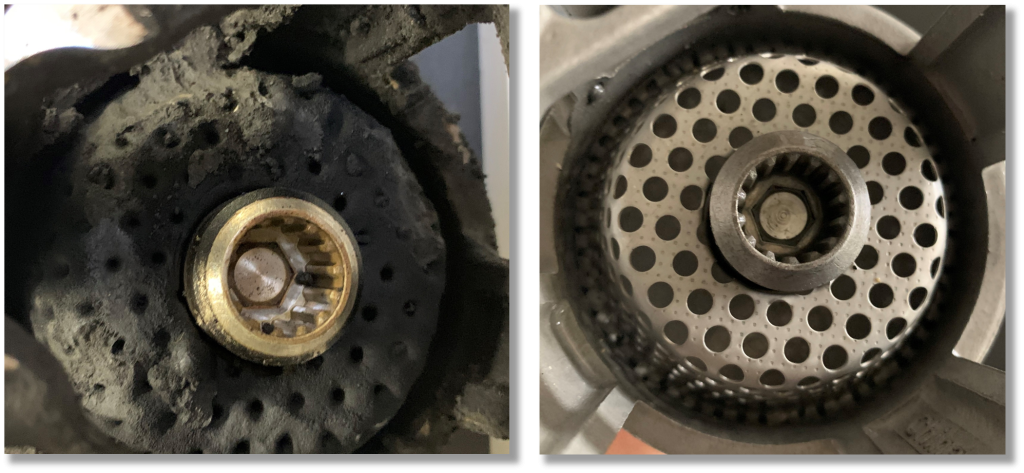
IMAGE: Example of Calcium Carbonate Buildup on Propellers
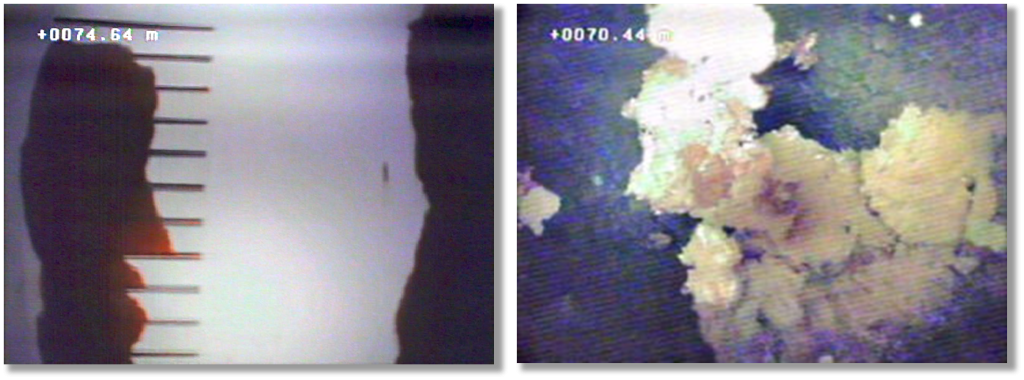
IMAGE: Downhole Camera View of Iron Bacteria (Left) and Calcium Carbonate Bacteria (Right)
ULTRA C
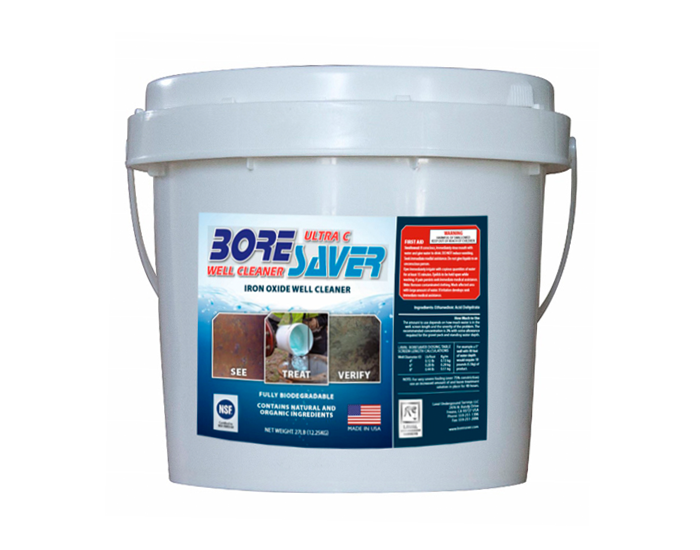
Boresaver Ultra C is an NSF60 approved organic treatment for Iron Bacteria buildup. It is a biodegradable, crystal powder that works to bring the sludge from iron bacteria into solution for easy purging.
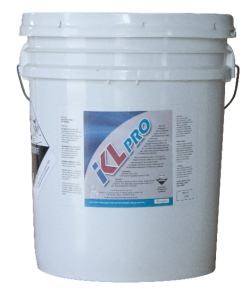
IMAGE: Bucket of Boresaver Ultra C
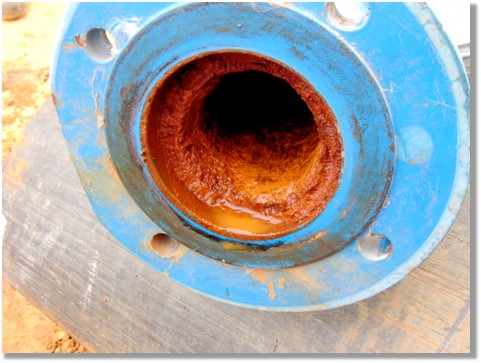
Iron bacteria is naturally occurring in groundwater and aquifers, but the buildup clogs, stains, and covers perforations in the well and pump. Iron-oxidizing bacteria derive the energy they need to live and multiply by oxidizing dissolved ferrous iron. These bacteria combine iron and oxygen to form deposits of “rust,” bacterial cells, and a slimy material that sticks the bacteria to well pipes, pumps, and plumbing fixtures. Left untreated, it can narrow pipe pathways and cover perforations, leading to burned out pumps and low water output. You can recognize it by its coloration, ranging anywhere from black to red to bright orange. It takes on a gelatinous or scale like temperament, making it difficult to remove with basic applications such as chlorine or bleach.
Ultra C works differently from typical water treatment chemicals. It is a specially designed formula that brings the solidified iron bacteria deposits in the well, piping, and pump into its own solution for simple removal. As IRB is naturally occurring in the aquifer, having a specialized treatment for it allows the time in between treatments to be farther apart, and less costly overall.
IMAGE: An Example of the Effects of Iron-Oxide on Equipment
IMAGE: Another Example of the Effects of Iron-Oxide on Equipment
IKL PRO
IKL Pro is an NSF60 approved well treatment product designed to treat this mineral and manganese scale on an efficient level. Safer than most well treatments designed for scaling, IKL Pro is a liquid formula that can be poured directly into the well head. It comes in three different sizes, 5 gallon, 55 gallon, and 270 gallon totes, for easy transportation to rural sites and safe handling.
IMAGE: Bucket of Boresaver IKL Pro
Calcium carbonate and manganese deposits cause thick scaling that clogs perforations in wells. Both are naturally occurring, but they can cause havoc on pump systems, wells, and piping if left untreated. Calcium scale originates when there is oversaturation of calcium in the water, leading to it falling out of solution and landing on any surface available. This includes pumps, well casings, and piping. It is characterized by a thick, white, hardened layer of limescale that is difficult to remove without chemical agitation. Manganese acts similarly to calcium, in that it adheres to any surface when it precipitates out of the water. You can tell the difference because manganese takes on a darker characteristic, leading more toward dark brown or black scaling.
IMAGE: The Effects of Calcium Carbonate Buildup on Equipment
IMAGE: Another Example of Calcium Carbonate Buildup
TREATMENT PROCESS
Preparation & Assessment
Remove pump (unless using pump-cycling method).
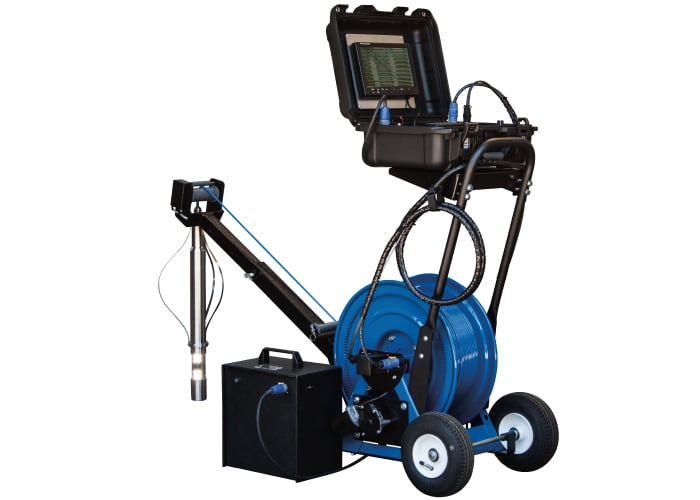
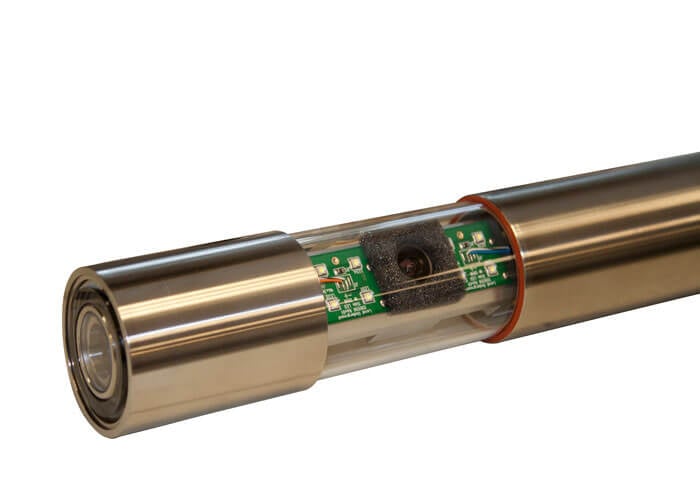
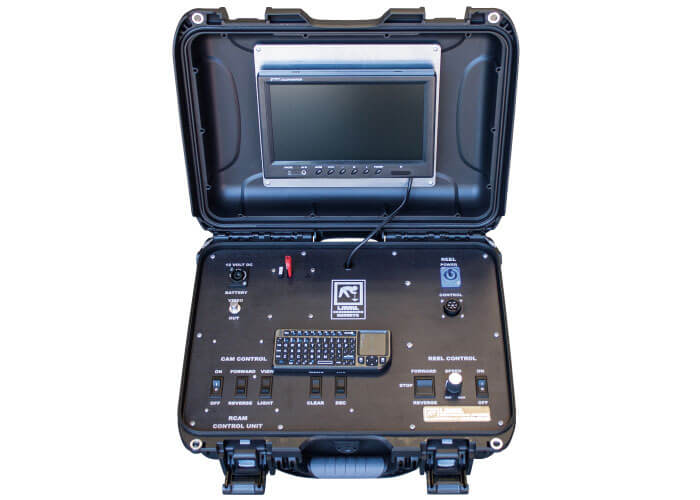
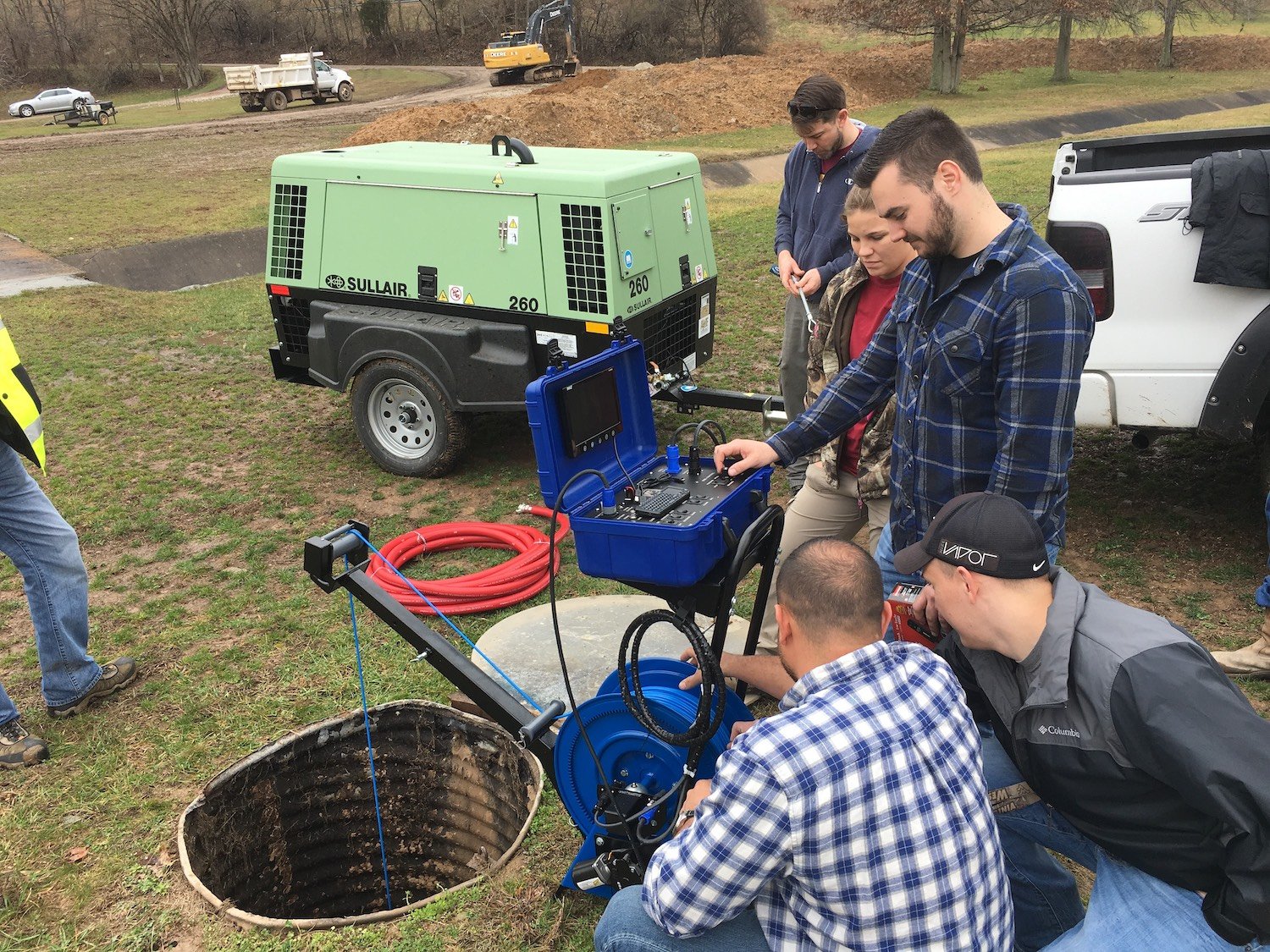
Inspect well with water well camera to determine fouling.
Calculate the amount of product needed
Measure and record the initial water pH.
Application
Add BoreSaver Product directly into well (or via tremmie).
Agitate thoroughly using one of these methods:
Mechanical surging / brushing
Air-assisted development
Pump cycling (for lighter fouling or pump cleaning)
Contact Time
Leave product in the well for 8–24 hours to dissolve deposits.
Purging
Purge a minimum of 6 casing volumes.
Measure flow and drawdown.
Dispose of purge water per environmental regulations.
If required, neutralize pH before disposal.
Post-Treatment
Sanitize the well
Test pH and water quality as required.
Reinstall pump (if removed).
Resume normal operations.
KEYS TO SUCCESS
Use correct dosage.
Agitate thoroughly.
Allow full contact time.
Properly purge afterward.
For severe clogging, perform two treatments rather than increasing concentration.
IMAGE: Before (Left) and After (Right) Treatment of IKL Pro on Manganese Buildup
Recent Posts
SUMMER MAINTENANCE TIPS – HOW CLIMATE AFFECTS YOUR BOREHOLE CAMERA
SOLD! – MARKETING VAN 2026
Elementor #5216
Gallery
Using the control unit on the RCAM system
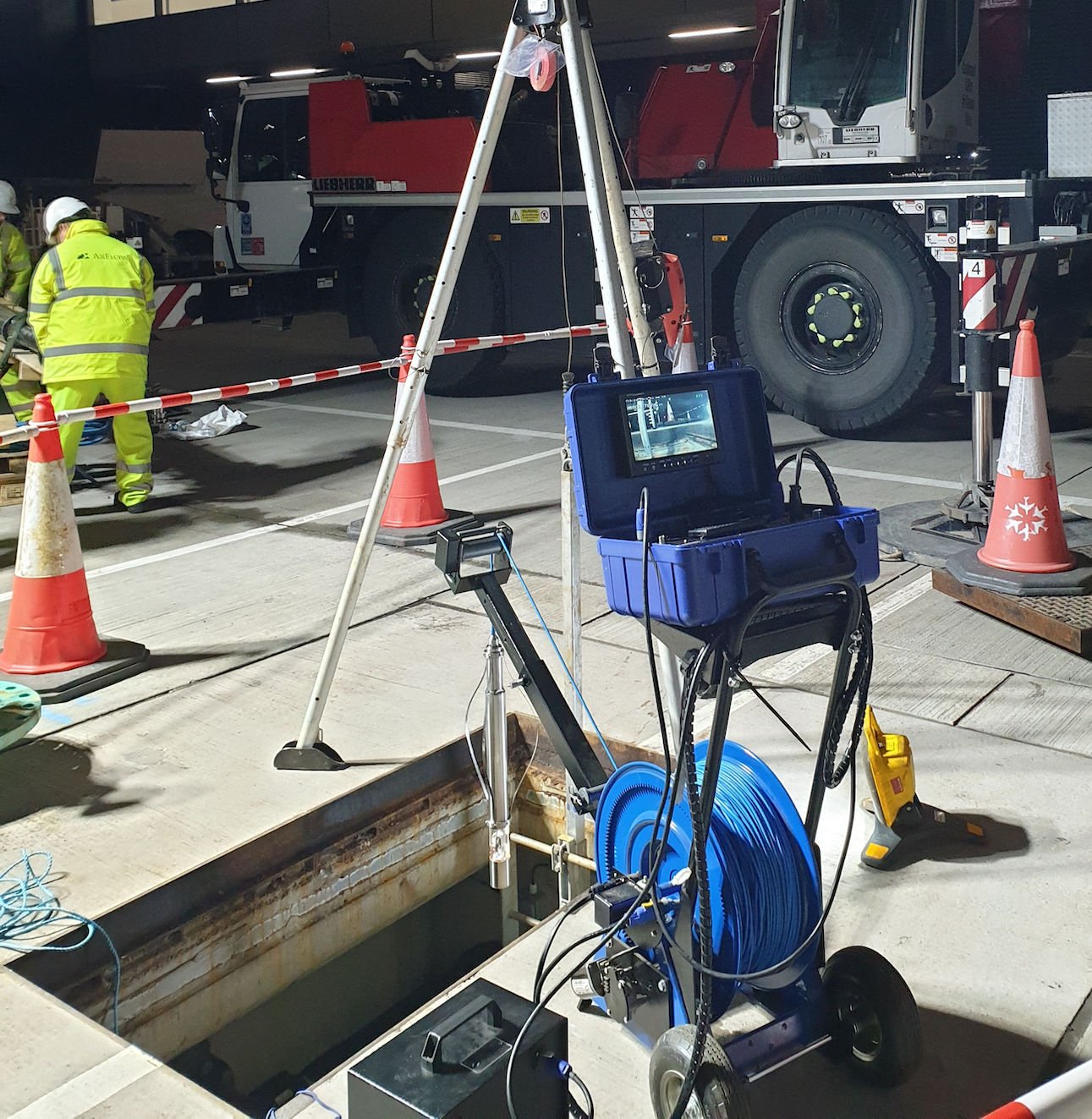
RCAM on winch and pully system
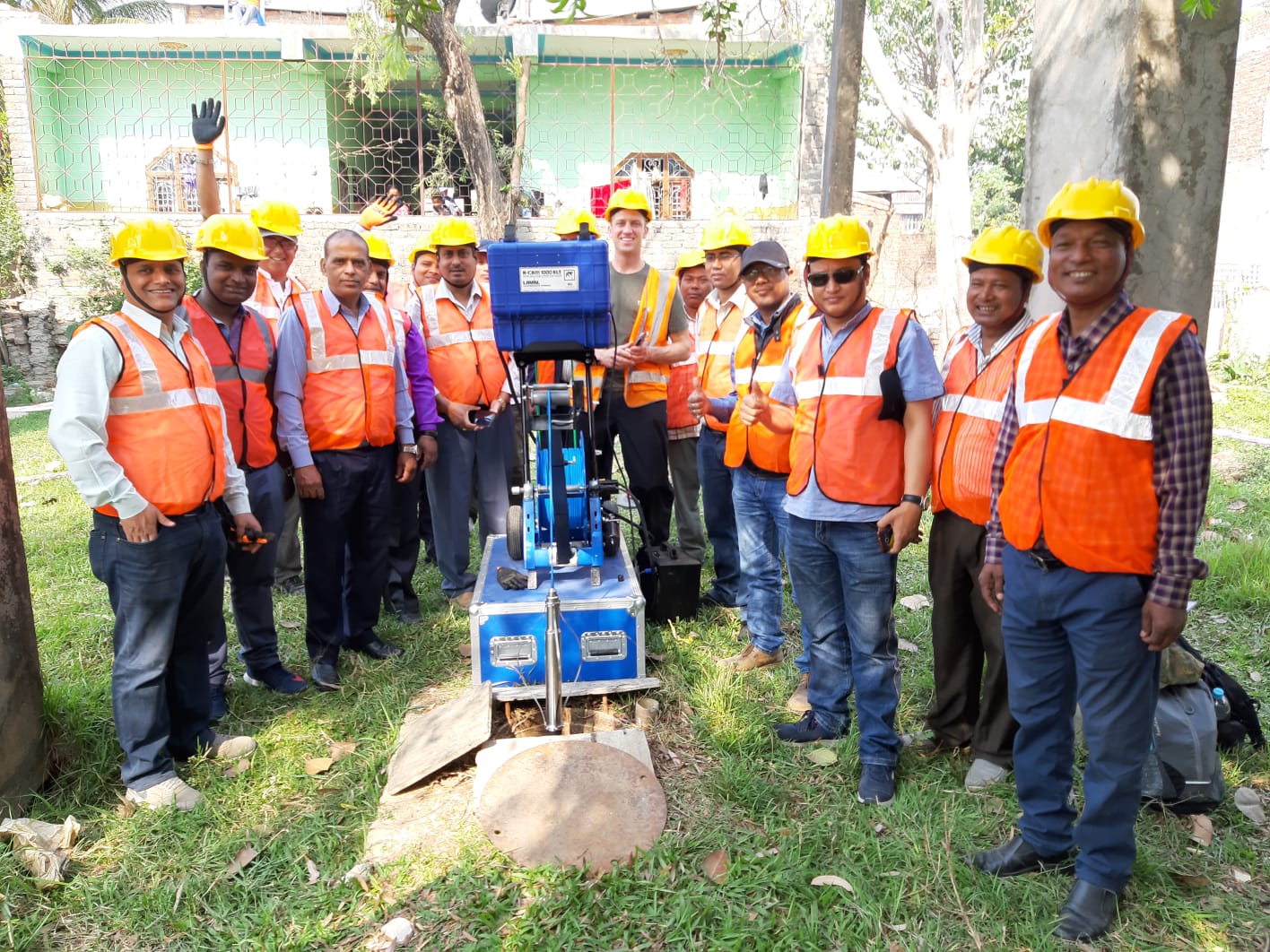
Workers surrounding RCAM Complete Borehole Camera System for Well Inspection
R-CAM underground well inspection
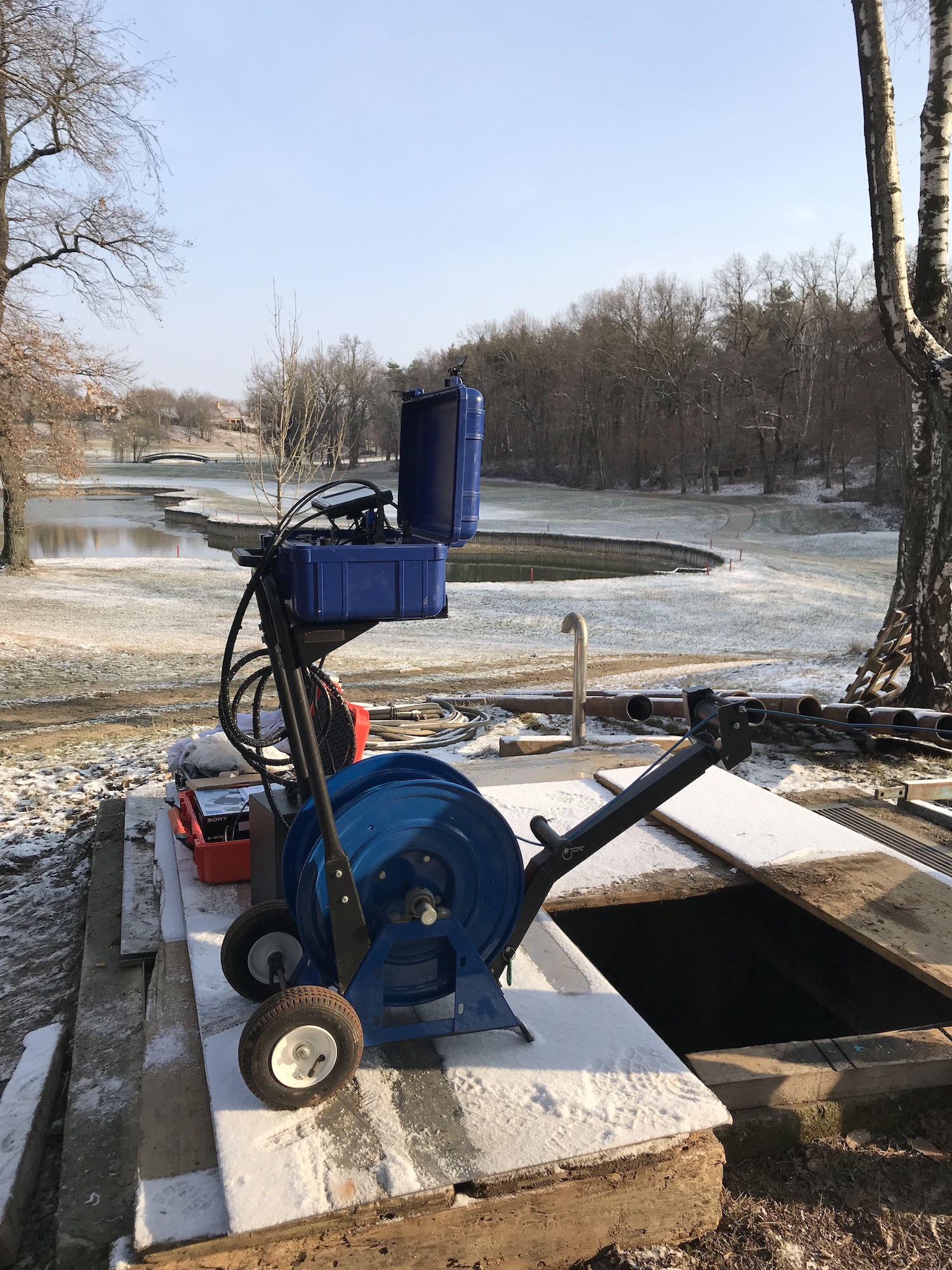
R-CAM TLE Level Wind Borehole Camera on Jobsite
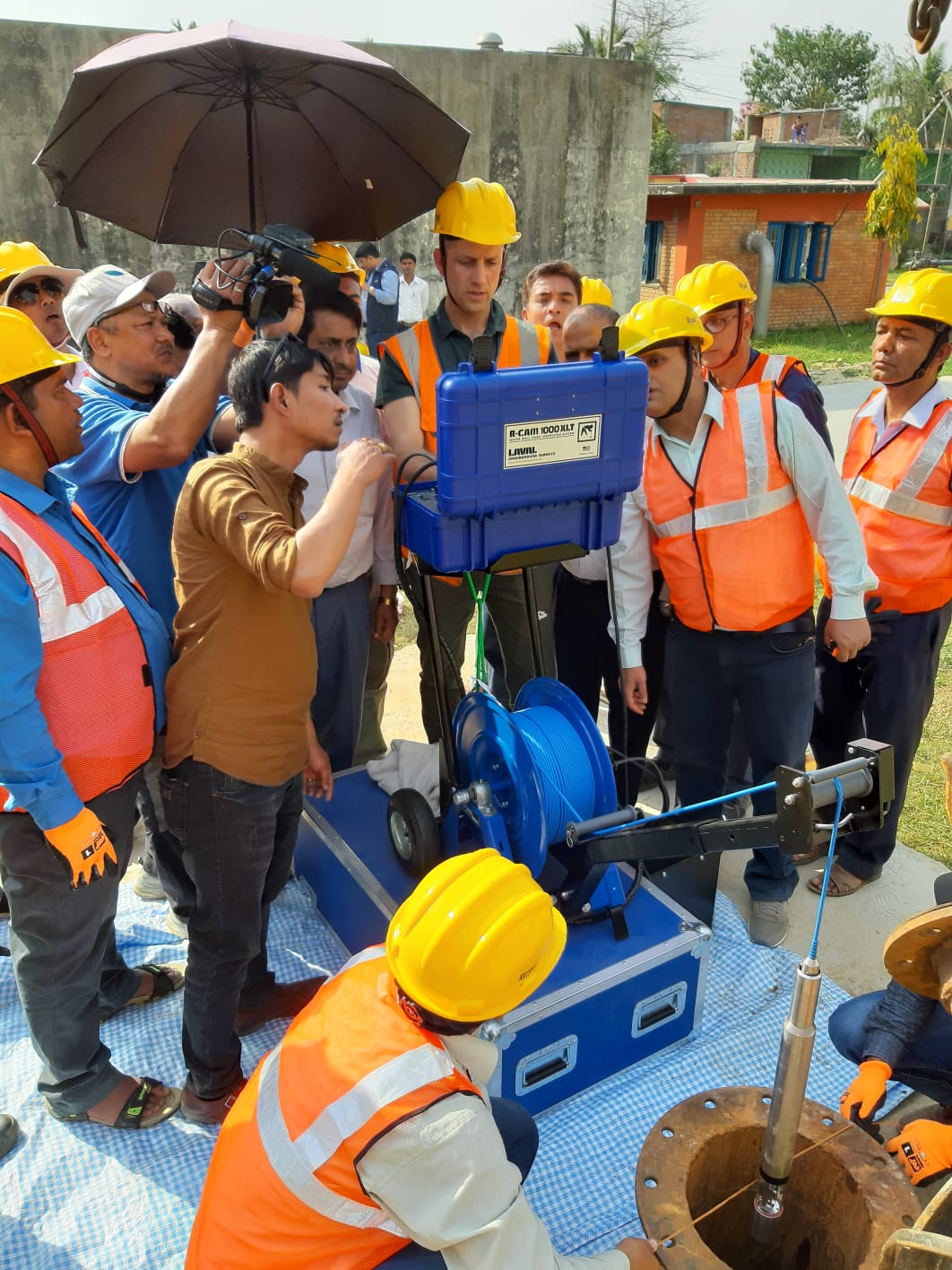
Workers using control unit on RCAM complete system to inspect well